

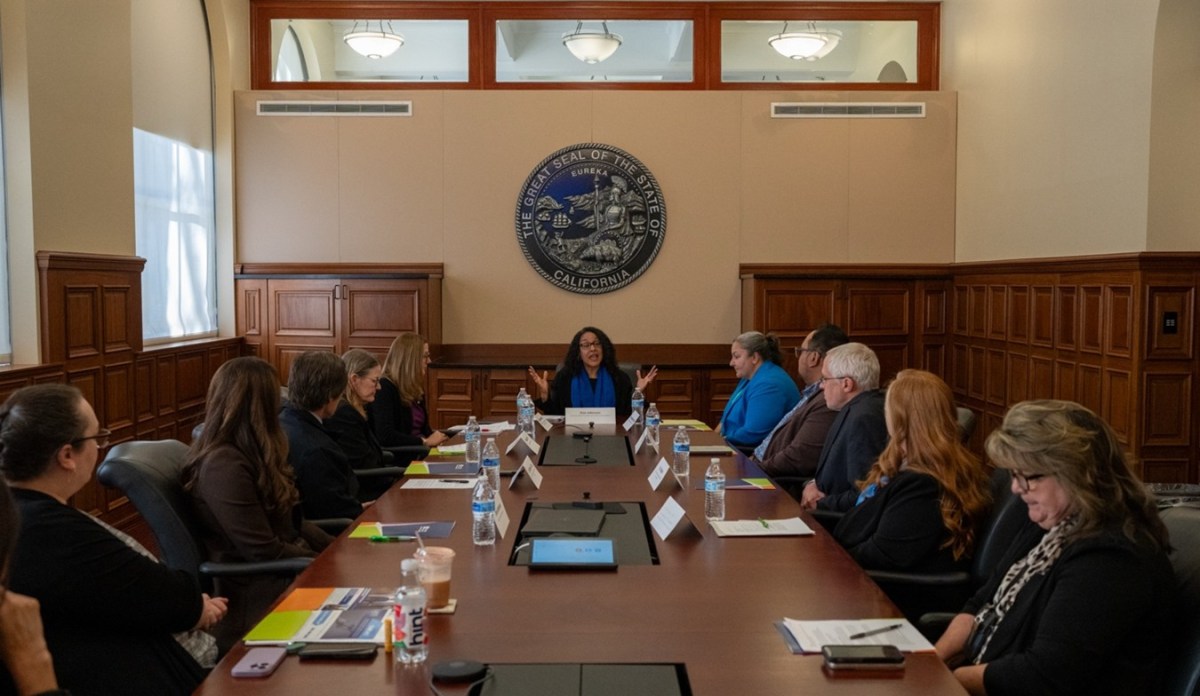
RIVERSIDE – California Health and Human Services Agency (CalHHS) Secretary Kim Johnson and Deputy Secretary Stephanie Welch met this week with regional leaders and community partners to assess early implementation of California’s Community Assistance, Recovery, and Empowerment (CARE) Act through CARE Court – part of the state’s continued commitment to understand early results and strengthen this landmark program. Riverside leaders shared their firsthand experiences, lessons learned and best practices for helping people access treatment, medication and housing through CARE, which has reached more than 7,500 Californians to date.
“The CARE Act is opening new pathways to recovery for Californians living with severe mental illness,” Secretary Kim Johnson said after the roundtable convening with Riverside County CARE practitioners. “Through counties’ sustained outreach and engagement, thousands of Californians are being connected to the treatment and supports they need to stabilize, recover, and thrive.”
The CARE Act is a new tool within the continuum of California’s behavioral health system that offers a structured pathway to stability centered on dignity and voluntary engagement for people with severe mental illnesses. CARE gives family members, healthcare providers, outreach teams and first responders the ability to petition for full wraparound support of clinical professionals and unprecedented oversight from a CARE Court judge for Californians who have historically fallen through the cracks of the system. CARE is designed to help people stabilize earlier through a least-restrictive approach, reducing the likelihood of more restrictive interventions like conservatorship (where they lose the right to make their own decisions) or incarceration.
“I’ve been in the field for 20 years and I’ve seen the transformation of mental health services in the state just continue to evolve. And the piece for me that has been spectacular about CARE is a new pathway for access,” said Sanie Andres, LMFT, ATR, Program Administrator, Restorative Transformation Center. “To be able to have a means for loved ones, first responders, other community members who are invested in people’s wellbeing to be able to petition and help them access services is spectacular.”
CARE connects people to a team that builds trust and coordinates treatment, medication, and housing support through a new civil court process called CARE Court. CARE is now being implemented statewide led by each county, showing meaningful engagement, and helping connect people to care—within CARE and related behavioral health programs.
“CARE helps to unify the systems of behavioral health, outreach, crisis response, and social services, coordinated by a new civil court that is focused on making progress for the individuals we are serving,” said Riverside Superior Court Judge Magdalena Cohen. “This is truly an unprecedented level of coordination for individuals who have too often cycled through jails, institutions, and the street seeking care. Through CARE, we are helping people change the trajectory of their lives, and the lives of their families.”
“There is no quick fix for people living with severe mental illness, but CARE has created a new approach that’s focused on dignity, progress and people’s unique needs,” said CalHHS Deputy Secretary Stephanie Welch. “Our mission is to continue to improve and strengthen CARE in partnership with California counties.
CalHHS will continue working with CARE practitioners across California counties, offering support and guidance to sustain effective implementation. CARE is available in all California counties as of December 2024. To learn more about accessing support and services through CARE, visit https://www.chhs.ca.gov/care-act/.
B-roll of this roundtable is available here.
BIGGER PICTURE: California has built a comprehensive continuum of behavioral health care, offering a full range of supports, from prevention and early intervention to treatment, crisis response, and long-term recovery. This approach is designed to ensure that every Californian, especially those who have historically faced the greatest barriers to care, can access high-quality mental health and substance use treatment when and where they need it. Backed by significant investments, new policies, and strong partnerships, the state is expanding treatment services and supportive housing, strengthening and diversifying the workforce, and making care more culturally and linguistically responsive. By prioritizing prevention, early support, and services tailored to individual needs, California is helping people get the right care at the right time, leading to better health outcomes and stronger communities statewide.
###